Why Some Levi's Jeans Cost More Than Others: The Fabric Story Nobody Talks About
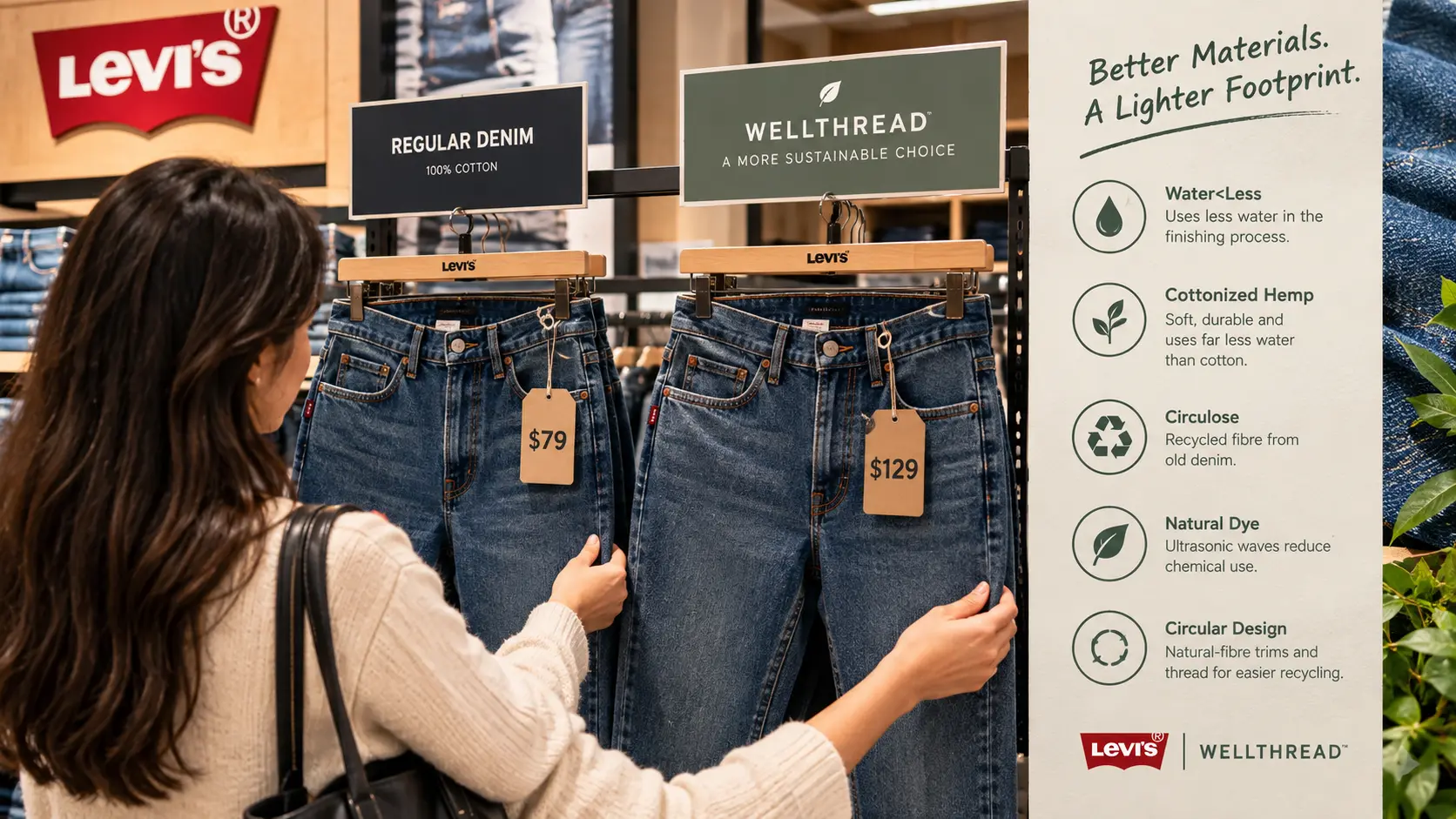
Pick up two pairs of Levi's jeans, both denim, both look similar on the hanger, and you might notice one costs noticeably more than the other. That price gap usually isn't random. In a lot of cases, it comes down to what the fabric is actually made from and how it was processed, not just the cut or the label. Here's the science behind it.
The Water Problem Nobody Talks About in Denim
Cotton is thirsty. Producing just 1 kilogram of conventional cotton fibre takes roughly 10,000 litres of water, enough to fill a small swimming pool for a single pair of jeans' worth of raw material. Multiply that across the millions of jeans sold every year, and denim quietly becomes one of the more water-intensive garments in anyone's wardrobe.
Levi's has spent years trying to shrink that number without changing what a pair of jeans actually looks or feels like. Two technologies sit at the centre of that effort: a finishing process called Water<Less, and a fibre blend called cottonized hemp.
Water<Less: Rethinking the Finishing Process
The worn-in look, the fading, the soft hand-feel of a broken-in pair of jeans, all of that comes from a finishing stage that happens after the denim is woven, and traditionally, that finishing stage used a lot of water. Water<Less technology reworks that specific step to cut water use significantly, without changing the final look or feel of the jeans on the rack.
It's easy to miss, because a Water<Less pair looks identical to a conventionally finished one sitting next to it. The difference is entirely in the manufacturing process, not the finished product's appearance.
Cottonized Hemp: Solving Texture Without Sacrificing Sustainability
This is where the science gets genuinely interesting. Hemp fibre needs only around 300 to 500 litres of water to produce the same weight as cotton's 10,000 litres, a fraction of the footprint. So why isn't every pair of jeans made from hemp already?
Texture. Raw hemp fibre is coarse, closer to the feel of linen than soft cotton denim. For decades, that made hemp a non-starter for anything you'd want against your skin all day.
Levi's answer was a process called "cottonization," a treatment that softens hemp fibre until it's close to indistinguishable from cotton by touch. The resulting fabric typically blends around 70% cotton with 30% cottonized hemp. There's a second layer to the water story here too: the specific hemp crop Levi's sources is rain-fed, not irrigated, meaning the plant itself draws no additional water beyond natural rainfall during growth.
You'll find this fabric in Levi's Wellthread collections, along with select mainline pieces, certain 511 jeans and Trucker Jackets among them. It isn't used across the entire catalogue, so a product page's fabric composition details are the way to confirm whether a specific item uses it.
Circulose: Turning Old Jeans Into New Ones
Wellthread's other major material innovation tackles a different problem entirely: what happens to jeans after they've been worn out. Circulose is a recycled material processed from old, post-consumer denim, mechanically and chemically broken back down into usable fibre rather than sent to landfill.
It's a genuinely circular idea, a worn-out pair of jeans becomes raw material for a new one, rather than the end of that fabric's life. Building a supply chain around recovered fibre instead of virgin cotton is a meaningfully different manufacturing model, not just a sustainability claim added after the fact.
Natural Dye, Applied Differently
Traditional denim dyeing relies heavily on chemical processing to get that classic indigo colour to set into the fibre. Wellthread pieces use a natural-dye technique that applies colour using ultrasonic waves instead, reducing the chemical load involved in getting the same rich, even colour.
Even smaller details carry the same philosophy through: the Red Tab, thread, and pocketing on Wellthread garments are made from natural fibres too, which makes the finished garment easier to recycle as a whole unit rather than a mix of materials that have to be separated first.
Wellthread at a Glance
| Innovation | What it actually does |
|---|---|
| Organic cotton | Grown without the synthetic pesticides and fertilisers used in conventional cotton farming |
| Cottonized hemp | A 70/30 cotton-hemp blend that cuts water use in fibre production |
| Circulose | Recycled fibre reprocessed from old, worn-out denim |
| Natural-dye technique | Ultrasonic dye application, reducing chemical processing |
| Design for circularity | Natural-fibre trims and thread, making full garments easier to recycle |
So Why Does the Price Tag Reflect This?
None of this is free to produce. Cottonizing hemp fibre, recovering and reprocessing Circulose, and running ultrasonic dyeing at scale all require specialised manufacturing steps that a conventional cotton denim line simply doesn't need. That's the honest explanation behind why a Wellthread piece sometimes costs more than a standard mainline pair in regular denim, the price reflects the R&D and processing technology behind the fabric itself, not just markup on the finished garment.
Understanding that changes how you read the price tag. It's not that a Wellthread pair is "the same jeans, more expensive", it's a genuinely different fabric, built through a genuinely different process, with a genuinely different footprint.
Final Thoughts
The next time you see a price gap between two pairs of Levi's jeans that look similar on the surface, it's worth checking the fabric composition before assuming it's just brand markup. Between Water<Less finishing, cottonized hemp, and Circulose, Levi's has built several genuinely different manufacturing paths into its lineup, and each one shows up in the price for real reasons.
If you're planning to buy either a standard or Wellthread piece, check current verified Levi's Hong Kong promo codes here before you check out.
Frequently Asked Questions
No. It changes the manufacturing process during finishing, not the final appearance or texture of the denim.
Cotton fibre production uses roughly 10,000 litres of water per kilogram, while the same weight of hemp fibre uses only about 300 to 500 litres.
No. It appears in select Wellthread collections and specific mainline pieces like certain 511 jeans and Trucker Jackets, not across the full catalogue. Checking a product's fabric details confirms whether a specific item uses it.
Circulose is a recycled material processed from worn-out, post-consumer denim, broken back down into usable fibre for new garments rather than discarded.
The specialised processes behind them, cottonized hemp production, Circulose fibre recovery, and low-chemical dyeing, require manufacturing steps that conventional cotton denim doesn't, which adds real cost beyond a standard pair.
About the Author

Riya Sharma
Riya loves uncovering hidden discounts and helping shoppers get the best value for their money. With over 4 years of experience, she focuses on simplifying complex deals and making savings easy for everyday buyers.